

I was trying to write about holiday commissions when I got distracted by a question: what have I overlooked?
At first I thought the answer might be writing this post itself. I’ve been quiet lately. Painting, homeschooling my children, applying for shows and residencies, and thinking about what I want my art practice to look like next year. I’ve been meaning to tell people what’s available and what I’m working toward.
But I hadn’t forgotten to write. I’d been avoiding it. And as I started thinking through why, a different kind of overlooking came into focus.
I’ve been listening to artists I admire talk about the work it takes to become a good painter. Go out every day. Paint from life. Leave miles of canvas behind you.
I believe in that work. I want to do it. I can feel what happens when I spend sustained time looking, experimenting, and painting. There is so much I want to learn.
But I keep coming back to the question: who gets the time to leave miles of canvas behind them?
Who is looking after the children? Who is planning the meals, remembering the appointments, and keeping the household running while the artist goes out to paint?
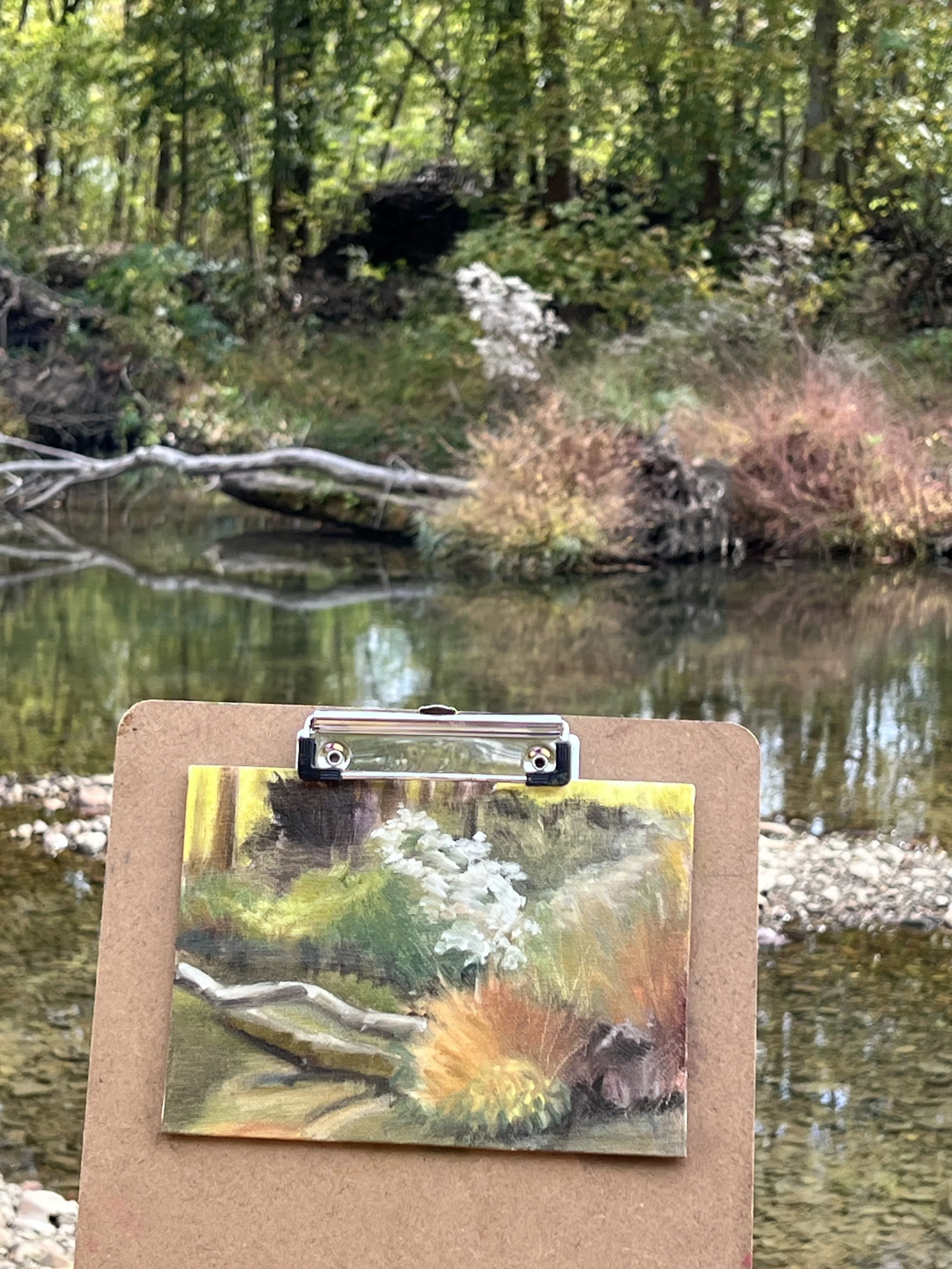
Painting en plein air by the Little Harpeth
River Foliage Study, Katelin Schutt
When I hear stories about artistic dedication, so often the people in the background are overlooked.
Behind many of my heroes stands a woman whose work made their uninterrupted work possible. The care and income and daily effort that allowed someone else to become extraordinary at something.
I want to credit my husband for doing what he can to make sure I have creative time - his caretaking is a major reason you see any art from me at all. And yet he still has a full time job, and I’m the primary caretaker.
Let’s be honest - the majority of artists with long and storied careers are white men married to women. The art ecosystem is set up to serve these artists. And whether or not our culture wants to look that truth in the eye, it is there. I’m not saying there aren’t exceptions. But what I’m pointing out is not news to anyone who is honest about what they see when they take the time to look.
As a woman raising young children, there are miles between the advice to “work every day” and the conditions required to follow it. I love my children. Our life together is part of what makes me want to paint in the first place. Everyday transformation, memory, the way light falls across an ordinary moment: these are things I’m trying to pay attention to as they change.
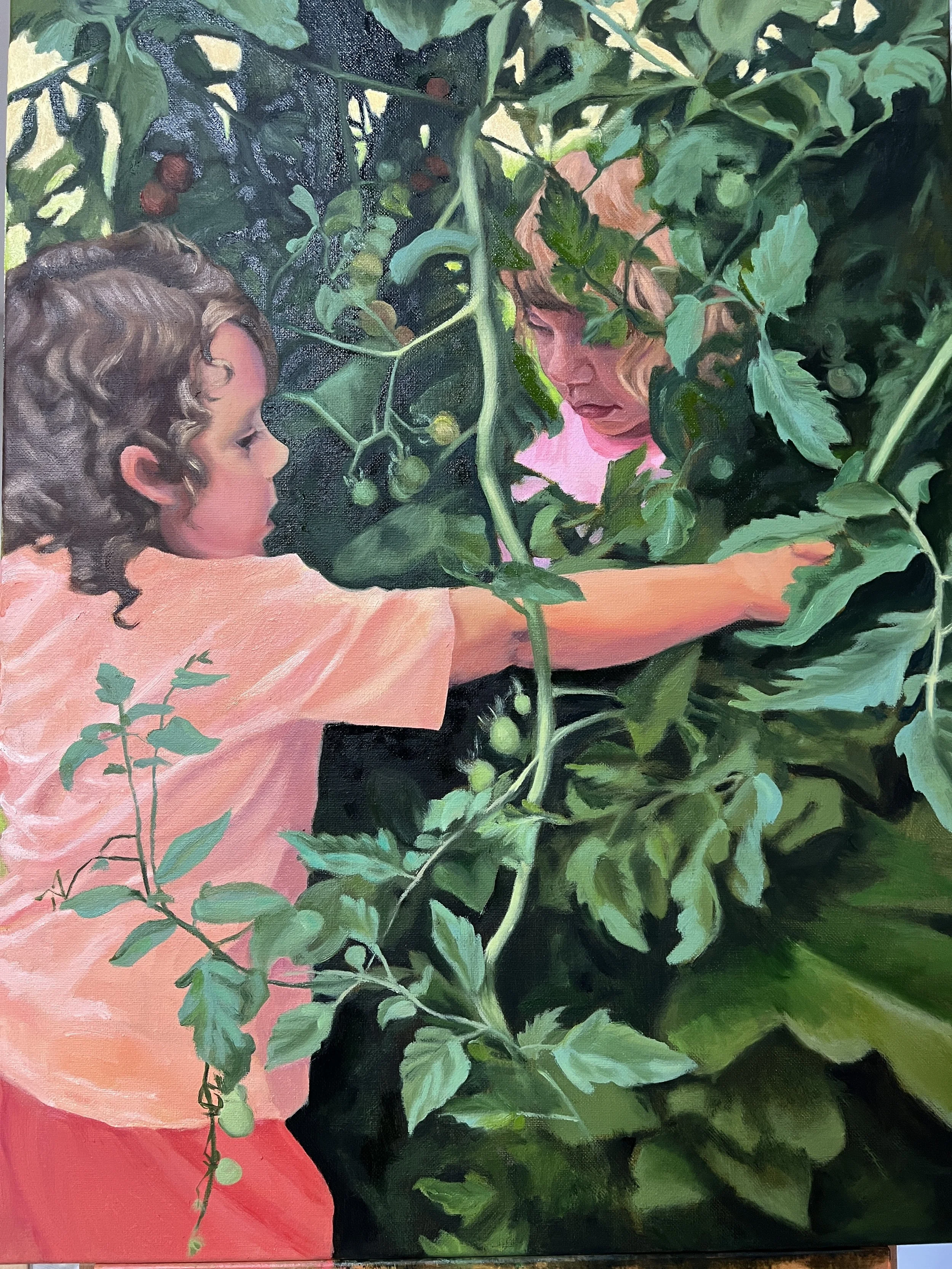
Painting my children has opened a new door into seeing them clearly as the near perfect example of life’s constant change.
Eternal Summer, Katelin Schutt
Raising children takes time. Painting takes time. Loving both doesn’t create more hours in the day.
Then there is the work of making the art visible.
I’ve been looking closely at the opportunities available to artists, and I’m becoming more particular about that word: opportunity.
A paid residency may offer time to work, but if I have to pay to attend and arrange childcare on top of it, how are parents supposed to get there? A fair may offer access to collectors, but the booth fee comes due before I know whether I’ll sell anything. Applications cost money. Travel costs money. Sometimes an event is canceled and the artist still carries the loss.
I understand that organizations have expenses. I have them, too. But why should artists carry the financial risk for organizations with budgets to rent convention centers? If there were scholarships or sliding scales, fellowships or any acknowledgment and attempt to ameliorate the financial burden of these events for marginalized groups, I would have a different opinion. As is, the number of fees that stack up in front of an independent artist feel designed to keep us “starving.”
So don’t be an artist then, the critics say. Would that I could. I think any struggling artist would agree that if they could give up being an artist, they would.
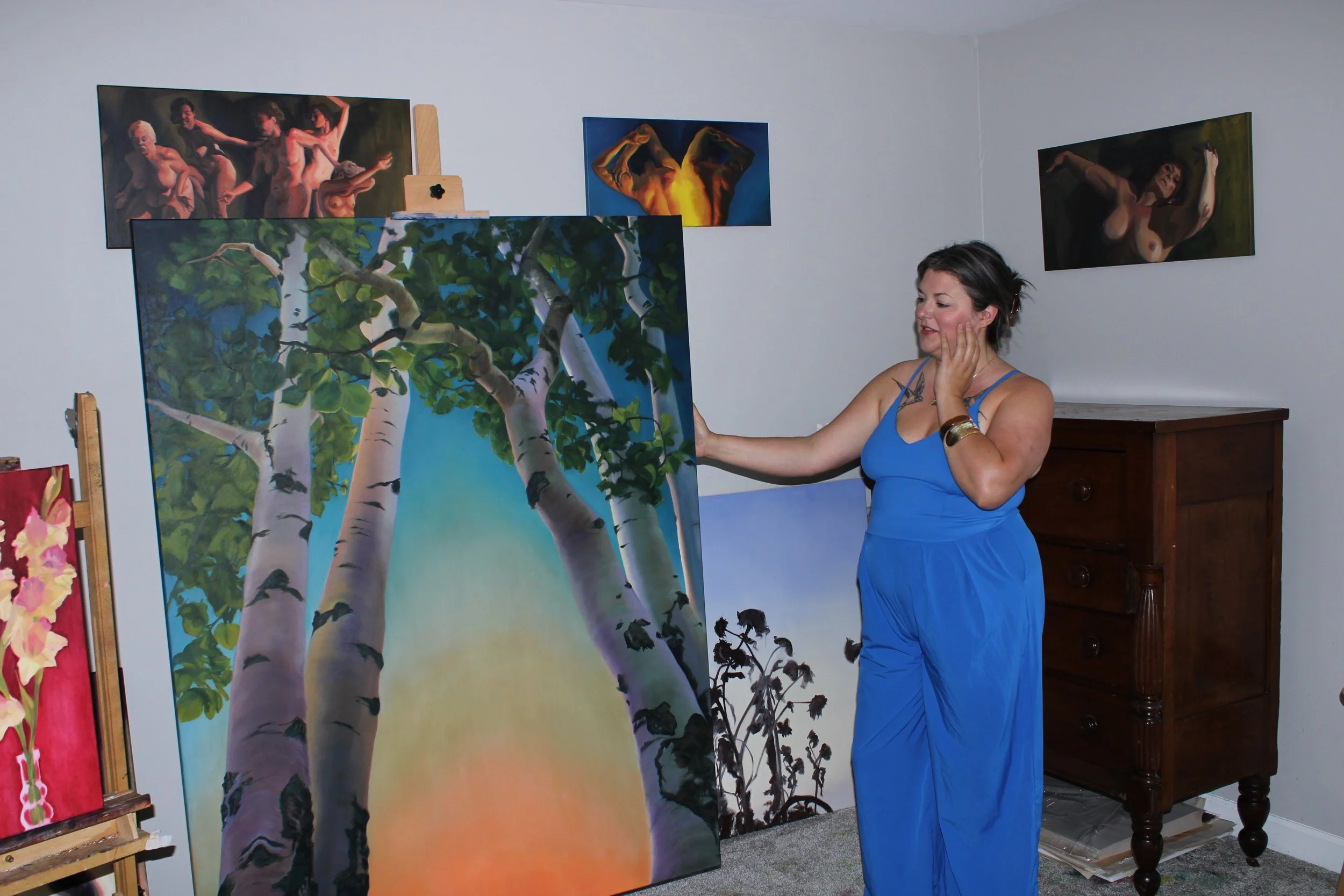
Me in my studio with a selection of work from 2025-26
What’s so important about art made by real people anyway? You can go into any Hobby Lobby and fill your house top to bottom with wall decor for what a large original painting costs. So why is art touched by a human’s hand better?
Only that art making is part of what makes us human. Tell me, which feels more enriching: a movie theater’s facade featuring this month’s movie posters or a building sporting a mural painted and designed by an artist? If you prefer the latter, then art means more than just decoration.
When someone buys a painting, that purchase helps pay for the next stretch of work. When an organization funds an artist’s time or childcare, it makes participation possible. When care is shared, someone gets hours in which to think and make.
Those are concrete things. They change what a person can do.
I’m thinking about next year with that in mind: where I want to paint, what I want to learn, and what kind of support would allow this practice to grow alongside my family.
I still want to leave miles of canvas behind me.
I also want us to talk about what makes those miles possible, so leave a comment or drop me a line - did anything I say resonate? Hit a nerve? Change how you see the art world? Let me know.